
Commercial dining environments
Restaurant booth and seating repair planned around active operations
Furniture repair, upholstery, and renewal for restaurant booths, banquettes, dining chairs, and other commercial seating, planned around furniture condition, operating hours, access, and the seats that need to remain available.
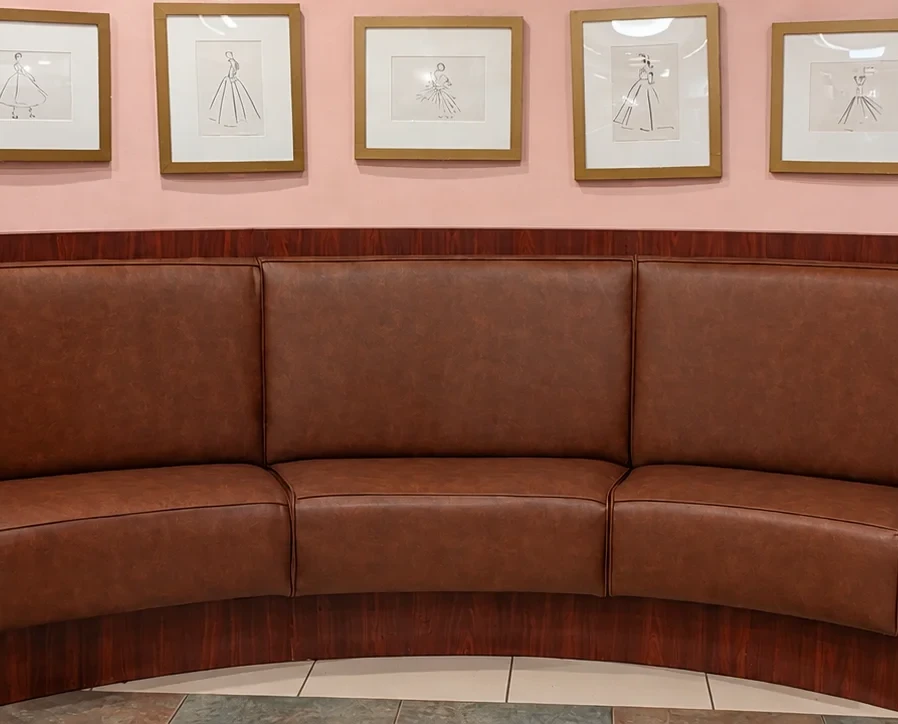
Plan the scope before seating leaves service
Visible wear does not always indicate the same underlying problem. One piece may need attention to a joint, support, trim element, or hardware. Another may need new upholstery, foam, or padding. Some items may no longer be sound repair candidates.
A condition review groups seating by location, type, issue, and recommended scope. This creates a clearer basis for deciding what to repair, what to reupholster, what to phase, and what may be better replaced.
Restaurant seating repair in practice
Localized wear does not always require replacing an entire seating unit. The condition, construction, and desired result determine whether a repair can return the furniture to service.
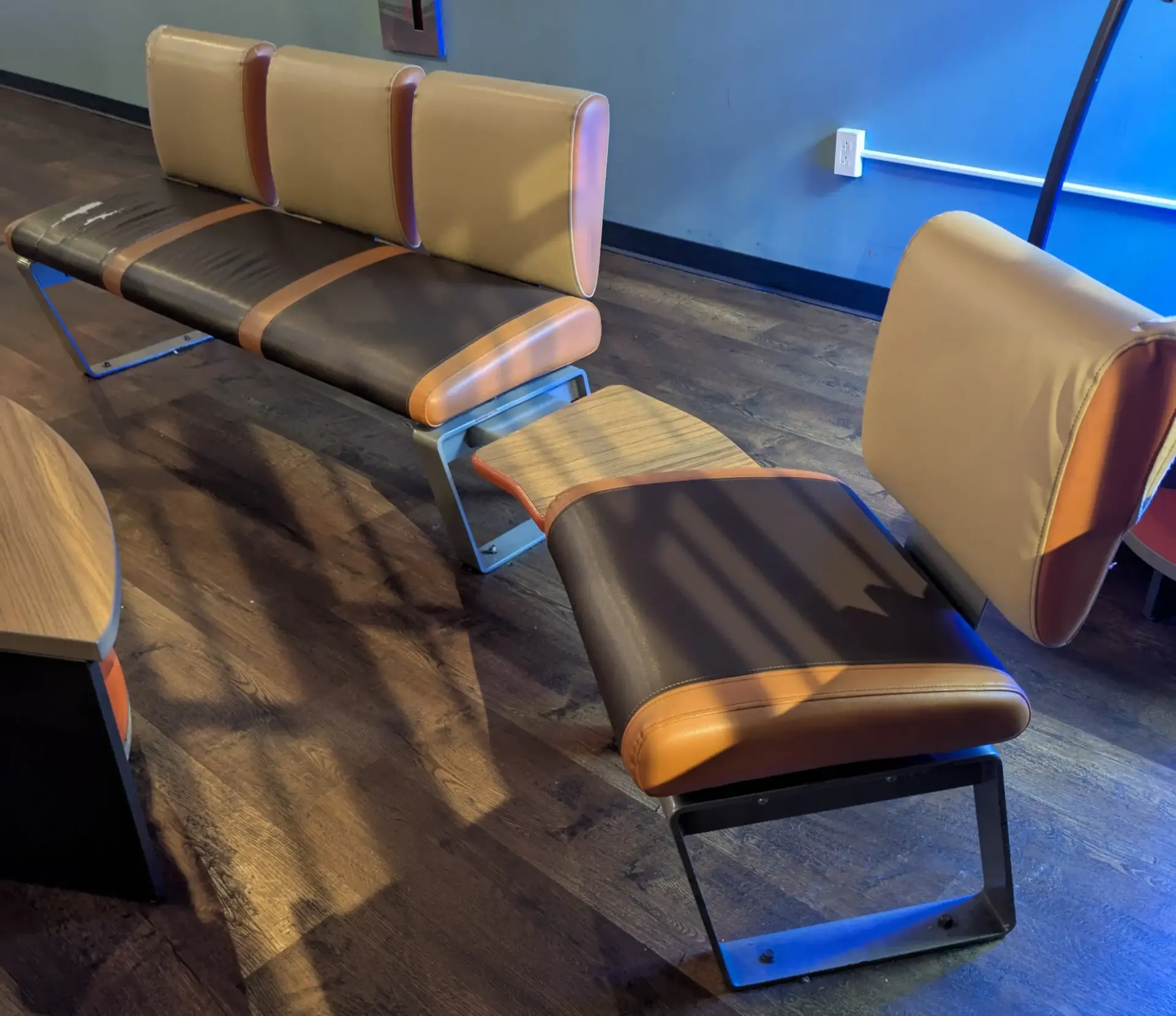

Restaurant booth and seating conditions we address
Furniture condition
Localized issues involving frames, joints, supports, trim, hardware, upholstery, foam, or padding.
Materials and appearance
Fabric, leather, finish, performance, color, availability, and visual consistency requirements.
Repeated seating groups
Similar booths or chairs that benefit from documented standards and consistent approvals.
Furniture movement
Furniture-specific labeling, pickup, staging, delivery, and return sequencing where included in the approved scope.
Some work can be completed at the facility, while other repairs are better handled in the shop. Fixed booths may also require removal, installation, or related carpentry. The furniture construction and the realities of the space are reviewed before that part of the project is planned.
Localized repair, broader renewal, or replacement
Localized repair
Useful when the underlying construction remains serviceable and the problem is confined to a repairable area or component.
Broader renewal
May make sense when the furniture remains a good fit for the space but its covering, foam, padding, or appearance no longer meets the facility’s needs.
Replacement
Appropriate when structural damage cannot be repaired soundly, parts or construction limit the work, or new furniture better serves the current operation.
Schedule around an active operation
Restaurant work has to fit around the dining room, not the other way around. On-site repairs may need to account for customer traffic, noise, dust, cure time, safety, and the space available to work. Shop-based projects shift the planning toward getting furniture out, keeping each piece identified and protected, and returning it in the right sequence.
If seating has to remain available, the project can move through smaller batches instead of taking an entire dining area out of service. Operating hours, available seating capacity, material readiness, and the number of pieces that can be released at one time help shape that sequence.
Once the work sequence is agreed, pickup or start dates and anticipated return dates can be built around the restaurant’s operating plan.
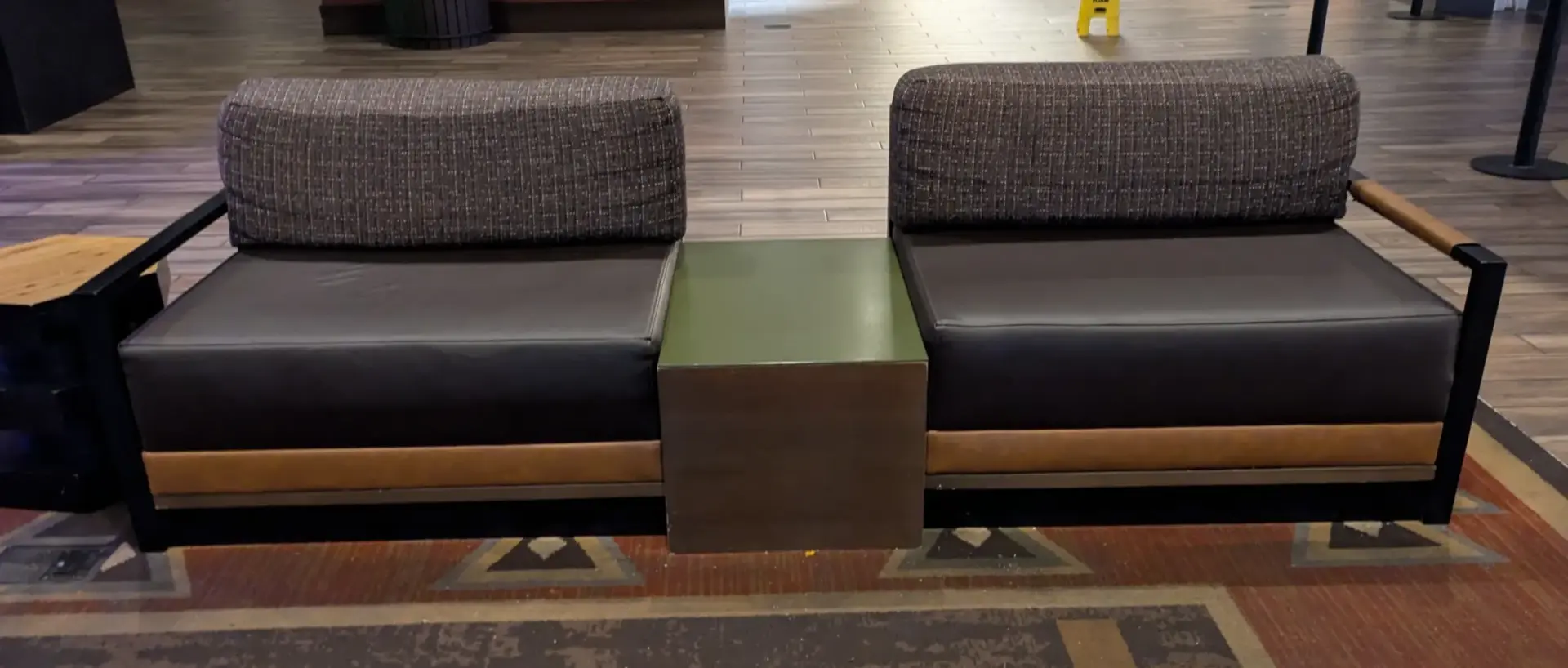
Keep repeated booths and locations consistent
When a dining room has repeated booths or chair groups, establishing an approved standard before a larger batch begins can make later work easier to manage. Fabric or leather, finish, color, performance requirements, and the expected appearance can be documented against the seating being renewed.
The same approach can help organize multi-location programs. Furniture can be documented by location and condition while shared material and appearance standards remain consistent, without assuming that every piece needs identical work. Related service: hospitality furniture repair and upholstery.
Information that helps with an initial review
- Restaurant location(s)
- Seating type and approximate quantity
- Overall photos and close-ups of worn or damaged areas
- A short description of the problem and desired result
- Whether the seating is movable or fixed in place
- Operating hours and preferred access windows
- Doorway, stair, elevator, loading, security, or staging constraints
- Existing material, color, finish, or appearance standards
- Target timing and planned closure, renovation, or event dates
For broader repair, upholstery, batching, and furniture lifecycle work, see commercial furniture services.
Restaurant seating project questions
Can restaurant seating work be phased?
Yes. If the dining room needs to remain open, seating can move through the project in smaller batches rather than being taken out of service all at once. The sequence can be built around operating hours, available seating, material readiness, and access to the furniture.
Does every worn seat need full reupholstery?
Not necessarily. A failed seam, damaged panel, loose component, or localized area of wear may be repairable without renewing the entire seat. More extensive wear or deterioration may make broader reupholstery the better approach.
Will the work happen on site or in the shop?
Both are possible. Some repairs are practical at the restaurant, while work that requires more space, disassembly, upholstery, curing, or controlled shop processes may be better handled off site. Fixed seating and difficult access are reviewed before the work location is established. Teal Tomorrow serves projects throughout Maryland and the Mid-Atlantic; see our service area for additional coverage information.
Furniture Repair • Upholstery • FF&E
Keep your furniture in service.
Share the furniture type, quantity, location, timing, and project details, and we’ll help identify the practical next steps.
Have photos or a piece count? Mention them with your inquiry.